
Dermal fillers are injectable medical products used to add support, shape, contour, or soft volume beneath the skin. The FDA notes that results depend on the underlying tissue structure, the volume used, the filler material, and the area injected. That is why two people can receive filler on the same day and experience different timelines.
Most modern facial fillers are temporary. Hyaluronic acid filler is common for lips, cheeks, folds, and facial balancing because it attracts water and integrates into soft tissue. Other fillers, such as calcium hydroxylapatite or poly-L-lactic acid, may be used in selected cases to support contour or stimulate collagen over time.
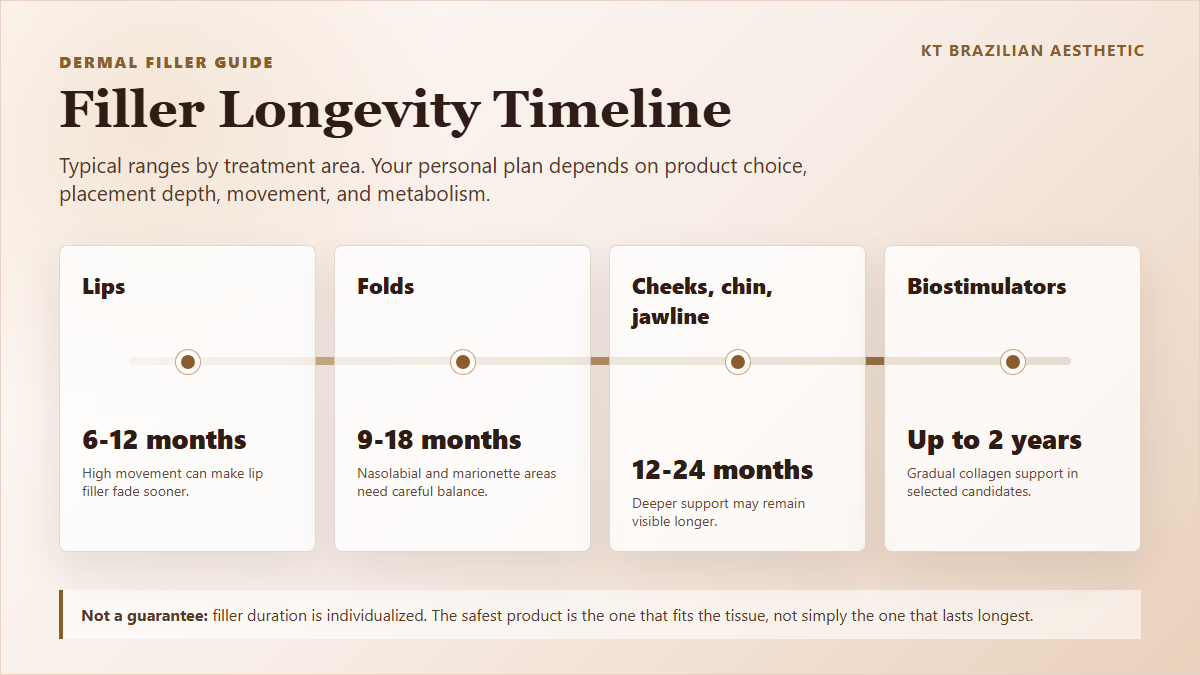
For many patients, hyaluronic acid filler lasts around 6 to 18 months. Softer, more mobile areas like the lips often metabolize filler faster because the tissue moves constantly. Areas with deeper placement or less movement, such as cheeks, chin, or jawline, may hold visible improvement longer.
Biostimulatory fillers follow a different timeline. Their effect may build gradually over several weeks because they encourage collagen support rather than simply placing immediate gel volume. In some patients and indications, these results may last up to 2 years, but the right choice depends on a medical consultation.
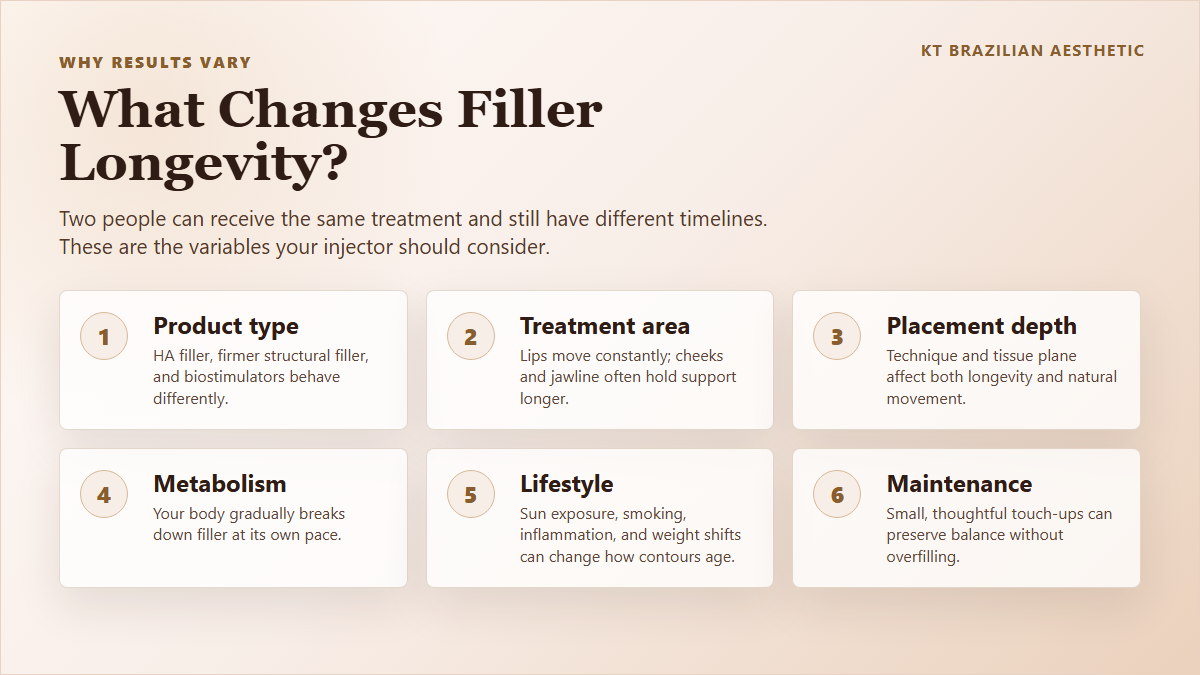
Filler longevity is influenced by product selection, injection depth, the amount used, facial movement, metabolism, and lifestyle. Sun exposure, smoking, inflammation, significant weight change, and inconsistent skin care can affect the way skin quality and contours age around the filler.
The treated area matters too. Lip filler is exposed to frequent movement from speaking, smiling, eating, and drinking. Cheek and jawline filler are often placed deeper for support, so the visible result may remain more stable for longer. Tear troughs, nasolabial folds, and marionette lines require especially careful planning because too much product can look heavy even if it lasts.
It can be tempting to ask for the product that lasts the longest, but that is not always the safest or most natural choice. A filler that is too firm, too heavy, or placed in the wrong plane may create puffiness, irregularity, or an overfilled look. The best plan balances longevity with flexibility, tissue safety, and facial harmony.
At KT Brazilian Aesthetic, filler longevity is discussed as part of a broader treatment plan. Your provider can evaluate whether you need volume replacement, contour support, hydration, collagen stimulation, or a different treatment altogether.

Many people prefer maintenance before filler has completely faded. Smaller touch-ups can help preserve a natural result without repeatedly starting from zero. The right schedule may be every 6 to 12 months for some areas and longer for others.
You may be ready for maintenance when your original concern starts to return, your contours look less defined, or facial balance feels different in photos. You should also schedule a check-in if filler looks uneven, swollen, migrated, tender, or different from what you expected.
Before treatment, ask what product is being used, whether it is FDA-approved for the intended use, why it fits your anatomy, what side effects are possible, and how complications are handled. The FDA warns against needle-free filler injection devices and against using dermal fillers for large-scale body contouring or body enhancement.
Dermal filler can create beautiful, subtle results, but it is still a medical treatment. A careful consultation is the safest place to review allergies, pregnancy or breastfeeding status, medications, previous filler, autoimmune or inflammatory history, and your goals.
Related service page: Learn more about facial fillers in Marietta at KT Brazilian Aesthetic and how a personalized consultation can help choose the right product and maintenance plan.
Sources reviewed: FDA Dermal Fillers overview; FDA-approved dermal fillers; FDA dermal filler do’s and don’ts; American Society of Plastic Surgeons dermal filler results; American Academy of Dermatology filler FAQs; and Cleveland Clinic dermal filler overview.
 EN
EN  PT
PT  ES
ES